Contouring Techniques for Different Face Shapes

Unlocking the Art of Contouring
Contouring has revolutionized the way we enhance our facial structure, turning everyday makeup routines into a canvas of artistry. Understanding the ideal contouring techniques for your specific face shape can profoundly affect your overall appearance. This guide will reveal how to achieve the sculpted look that best complements your unique features.
Why Face Shape Matters
Every individual’s face shape comprises distinct characteristics that require tailored approaches to contouring. Identifying your face shape is the first step towards contouring mastery. Recognizing these differences can make a monumental impact on how your makeup enhances your inherent beauty. Consider the following common face shapes:
- Oval: This shape features balanced proportions, where the forehead, cheekbones, and jawline are slightly rounded. Advancing this shape requires subtle refinement rather than dramatic alterations. Aim to accentuate the natural bone structure with minimal shading and highlighting.
- Round: Characterized by softer corners and a fuller appearance, individuals with round faces can use contouring to create the illusion of more angular features. Applying darker shades to the sides of the face and along the jawline can elongate the appearance, while highlighting the center of the forehead and chin draws attention to the middle, balancing the overall look.
- Square: Distinguished by a strong jawline and equal width across the forehead and chin, contouring for square faces focuses on softening angles. Employing a rounded contour along the jawline and highlighting the cheekbones can help create an illusion of softness.
- Heart: Defined by a wider forehead and a narrow chin, individuals with heart-shaped faces can achieve balance by contouring along the temples and jawline. This technique draws attention to the cheeks and creates a more harmonious overall shape.
- Long: Notable for its elongated silhouette, this face shape can benefit from contouring aimed at creating balance. Darker shades along the forehead and chin can visually shorten the face, while highlights on the cheeks enhance a radiant appearance.
Key Techniques to Explore
Armed with knowledge about your face shape, you can now embark on mastering essential contouring techniques to redefine your appearance:
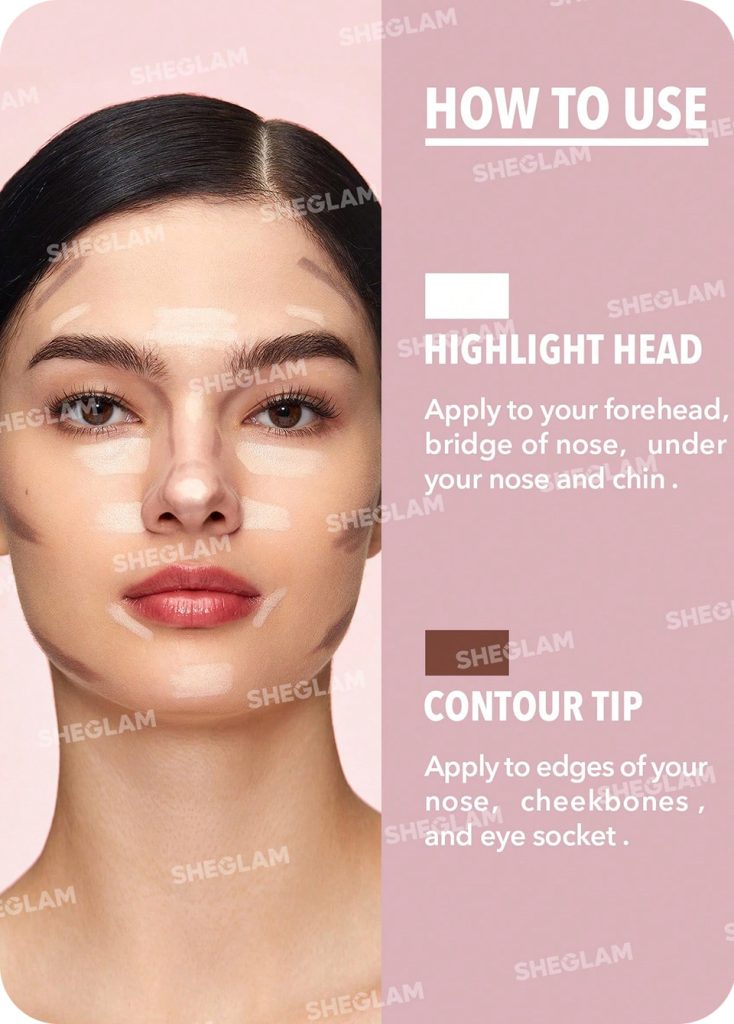
- Highlighting: This technique emphasizes high points of your face, such as cheekbones and the bridge of the nose. Utilizing a light-reflecting highlighter can produce that coveted glow and add dimensionality to your makeup.
- Shading: Creating depth and dimension relies heavily on shading specific areas. Using a bronzer or a matte contour product to shade under the cheekbones and along the jawline offers a sculpted effect, transforming your facial silhouette.
- Blending: A crucial step, blending ensures a seamless transition between the highlighted and shaded areas. Proper blending is essential to achieving a natural finish, avoiding any harsh lines that could detract from the overall look.
Join us as we delve deeper into tailored techniques for each face shape, unlocking the secrets to a radiant and defined look. The art of contouring can elevate your makeup game, allowing you to express and celebrate your unique facial features creatively. Techniques may vary, but the fundamental principles of beauty remain universal and offer endless possibilities for exploration.
DISCOVER MORE: Click here to dive deeper
Tailored Contouring Techniques for Every Face Shape
Now that you have a grasp of your face shape and basic contouring principles, it’s time to dive deeper into specific techniques that work best for each unique structure. Recognizing how to apply makeup based on your facial silhouette can truly transform your overall look, providing a polished, professional finish that highlights your features. Let’s explore the contouring techniques suited for various face shapes:
Oval Faces: Subtle Enhancements
For those with an oval face, the goal is to maintain the natural balance while adding a touch of definition. Start by applying contour cream or powder beneath the cheekbones and gently blending inward. This technique adds dimension without straying from your inherent symmetry. Use a soft highlighter on the tops of your cheekbones and the bridge of your nose for an illuminated finish. Remember, less is more for this face shape.
Round Faces: Creating Angles
Individuals with round faces often seek to create the illusion of more defined angles. To achieve this, focus on contouring the sides of the forehead to make it appear narrower and enhancing the jawline with bronzer. Apply a darker shade from the sides of your cheeks down toward the jawline, blending towards the ears for a seamless look. Highlight the center of the forehead and the chin to draw attention to the middle of the face, effectively balancing your features.
Square Faces: Softening Hard Lines
With sharp angles and a strong jawline, those with square faces can benefit from techniques that soften their contours. Begin by applying a matte bronzer along the jawline, extending it toward the ears for gentle shaping. Highlighting the temples and the tops of the cheekbones will create a more rounded effect. Aim for a gentle, blending technique to avoid harsh lines, and opt for soft shades that enhance rather than compete with your natural bone structure.
Heart-Shaped Faces: Balancing Proportions
For heart-shaped faces, the key is to balance a wider forehead with a narrower chin. Start by contouring the temples to minimize width, and use bronzer along the jawline to add definition. Highlight the tops of the cheekbones, directing the attention towards your natural features. Adding luminizer to the center of the forehead and the chin emphasizes your youthful glow while maintaining overall harmony.
Long Faces: Adding Width
To achieve balance on long faces, focus on techniques that create width. Apply contour along the forehead and chin to visually shorten the face. Blend a darker shade along the sides of the cheeks, maintaining a focus on the cheekbones rather than elongating them. A strategically placed highlight on the corners of the eyes and cheeks can brighten and visually widen the face, elevating your overall aesthetic.
By tailoring your contouring techniques to your face shape, you can unlock themes of versatility and creativity in your makeup application. Each unique shape tells a story of beauty, inviting you to express yourself while enhancing your natural features. The world of contouring is filled with potential, and understanding these nuances will surely enhance your artistry behind the makeup brush.
Exploring Contouring Techniques for Different Face Shapes
When it comes to enhancing your natural beauty, understanding the significance of facial structure is essential. Each face shape—whether round, oval, square, or heart-shaped—offers distinct opportunities for contouring. By mastering the art of contouring, individuals can accentuate their best features while minimizing any perceived imperfections. One of the most popular methods involves applying a shade darker than your skin tone to the areas you want to recede, usually the sides of the nose, the jawline, and under the cheekbones. This technique is particularly effective for individuals with round and square face shapes, as it adds definition and elegance to the overall look. Conversely, for those with an oval face shape, contouring can help maintain the natural balance of proportions, ensuring that facial features appear cohesive and harmonious.To delve deeper into various contouring methods tailored to diverse face shapes, a clear understanding of the specific nuances associated with each shape helps to achieve flawless results. For instance, utilizing a highlighter on the high points of your face—like the cheekbones, brow bones, and the bridge of the nose—can create a radiant and lifted appearance, enhancing the contours. Furthermore, contouring palettes now include a variety of formulations—creams, powders, and sticks—to suit different preferences and skin types. For beginners, cream formulas might be easier to blend, while powder contours can provide a matte finish optimal for oily skin types.Knowing about tools and application techniques is just as important as mastering the shading. Brushes versus sponges, for instance, can alter the final look significantly; a dense brush can deliver more coverage while a sponge offers a softer application.
Benefits of Tailored Contouring
The advantages of using targeted contouring techniques are numerous. They include:- Adding structure and definition to the face.- Customizing makeup looks for various occasions.- Enhancing natural features and contours.- Creating a sculpted appearance that can exude confidence and style.As you embark on this exciting journey into contouring, consider how these methods can empower you to embrace your unique characteristics better. By experimenting with techniques designed specifically for your face shape, you can discover new ways to enhance your beauty routine.
| Face Shape | Contouring Technique |
|---|---|
| Round | Apply darker shades to the sides of the face and under the chin to create a longer appearance. |
| Square | Focus on softening the jawline and adding dimension to the forehead to balance the sharp angles. |
| Oval | Highlight the cheeks and forehead while keeping the jawline soft to maintain the natural balance of proportions. |
| Heart | Contour around the forehead and highlight the chin to bring attention back to the lower part of the face. |
By understanding the contours of your face shape and applying these personalized techniques, you’ll be well on your way to achieving a flawless makeup look that enhances your unique beauty.
DISCOVER MORE: Click here to learn about sustainable beauty
Refining Techniques for Diverse Facial Structures
Understanding how to contour based on face shape isn’t just about following a set routine; it’s an art form that celebrates individuality. As we delve deeper into specific techniques for each face shape, it’s essential to consider the unique characteristics that define your features. Personal preferences, skin types, and even cultural influences play a significant role in makeup application. Let’s explore additional face shapes and contouring strategies that can elevate your artistry and refine your techniques:
Diamond Faces: Emphasizing the Best Features
Diamond-shaped faces have distinctive cheekbones and a narrower forehead and jawline. To enhance these characteristics, begin your contouring under the cheekbones to highlight the natural angles that make this face shape stand out. Use a bronzer along the outer edges of the forehead and jawline, blending seamlessly to create a shadow that softens the appearance of sharp contours. Highlight the bridge of your nose and the tops of your cheekbones to draw attention to your features, creating a striking balance.
Oblong Faces: Creating Balance and Proportion
For those with oblong faces, the objective is to create a more rounded appearance. Contour under the chin and along the sides of the forehead to balance out the length of the face. When contouring the cheeks, apply product slightly near the ears and blend it toward the center of the face, softening the length. Highlighting the cheeks, brow bones, and the tip of the nose will illuminate your facial features and counteract the narrowness, providing a more harmonious look.
Base of the Triangular Faces: Highlighting the Chin
Triangle-shaped faces, characterized by a narrow forehead and wider jawline, benefit from contouring that emphasizes the upper portion of the face. Start by contouring the sides of the forehead, gradually darkening toward the temples, which will effectively balance the wider jaw. Apply bronzer along the jawline too, but keep the focus on the chin area by adding a hint of highlighter. This technique draws attention upward, effectively softening the strong angles characteristic of the triangular shape.
Mixed Face Shapes: Flexibility in Application
For those who find themselves with a combination of different face shapes, contouring can be a flexible endeavor. Assess the features that dominate your face and employ varying techniques accordingly. You might have a round jawline with an oval forehead; therefore, a tailored approach is key. Identify the areas where both roundness and angularity exist, applying contour and highlight strategically to create a seamless transition between both profiles. Using customized products, like a contour stick or cream, allows for more precision in blending and application.
Makeup Tools and Application Techniques
While understanding your face shape is crucial, the tools and products employed can significantly alter the effectiveness of contouring. Using beauty sponges for blending creates a smoother finish, while brushes provide more precise application. Consider investing in high-quality, versatile tools that can adapt to multiple techniques and allow for a more professional effect. Additionally, makeup setting sprays can help maintain the contour throughout the day, ensuring your masterpiece remains intact.
Ultimately, contouring is about refining and celebrating your natural beauty through strategic applications tailored for your face shape. By understanding the nuances of various techniques and tools, you can unlock a world of possibilities in makeup application that enhances your individuality and creativity.
DISCOVER MORE: Click here to learn about sustainable beauty
Conclusion: Mastering the Art of Contouring for Every Face Shape
In the realm of beauty, contouring techniques have emerged as a transformative tool, allowing individuals to enhance their natural features with finesse. Whether you possess a diamond, oblong, triangular, or a mixed face shape, understanding the specific contouring strategies tailored to your unique structure is key to achieving that coveted look. It’s essential to recognize that makeup should be a form of expression that aligns with one’s personality and preferences.
By exploring various contouring methods, we unravel the art of highlighting and shading that not only adapts to different face shapes but also celebrates the diversity of beauty. Each technique—from creating balance within oblong faces to accentuating prominent features on diamond shapes—provides an opportunity for creativity and customization. Moreover, the tools you choose, be it brushes or sponges, significantly influence the outcome of your artistry, emphasizing the importance of investing in quality products.
The journey of contouring is not merely about aesthetics; it is about embracing the unique features that define you. As you experiment with these techniques, consider how each application reflects your individual style and cultural influences. Don’t shy away from adjusting the methods to fit your taste, allowing your creativity to shine through. By mastering contouring for different face shapes, you elevate your makeup skills while celebrating your authentic self.
In a world driven by trends, take the time to explore your own individuality, and remember: makeup is not just about the application—it’s about revealing the beauty that lies within.
Related posts:
Brush vs. Sponge Application Techniques: Which is Best for You?
Long-Lasting Makeup: Strategies to Keep Your Look Perfect All Day
The Evolution of Contouring Techniques: From Basic to Advanced
Makeup Techniques for Oily Skin: How to Control Shine and Increase Longevity
Makeup Techniques for Night Events: Creating Striking and Long-Lasting Looks
Sustainable Makeup Techniques: Eco-Friendly Products and Ethical Practices for Beauty

Linda Carter is a writer and beauty expert specializing in skincare routines, cosmetic ingredients, and holistic self-care practices. With extensive experience helping individuals achieve healthy, radiant skin and make informed beauty choices, Linda shares her knowledge on our platform. Her goal is to empower readers with practical advice and science-backed strategies for lasting beauty and skin health.